Neither fat transfer nor implants is better for every person. The right choice depends on how much volume you want, how much extra fat you have, your unique anatomy, and the look you hope to achieve. Implants usually create a larger, more predictable change in size, while fat transfer uses your own tissue for a softer, more modest increase and can also slim another area at the same time.
Premier Plastic Surgery in Pearland, TX, offers both natural breast augmentation and implant-based breast augmentation. Dr. Christopher Hankins evaluates each patient as a whole and recommends only the treatment that fits your body, aesthetic goals, and personal preferences.
Breast augmentation is a surgical procedure that adds volume to increase size, improve shape, and create a more balanced, proportionate silhouette. It is one of the most popular cosmetic procedures today and can be done with implants, fat transfer (fat grafting), or, in some cases, a mix discussed during consultation.
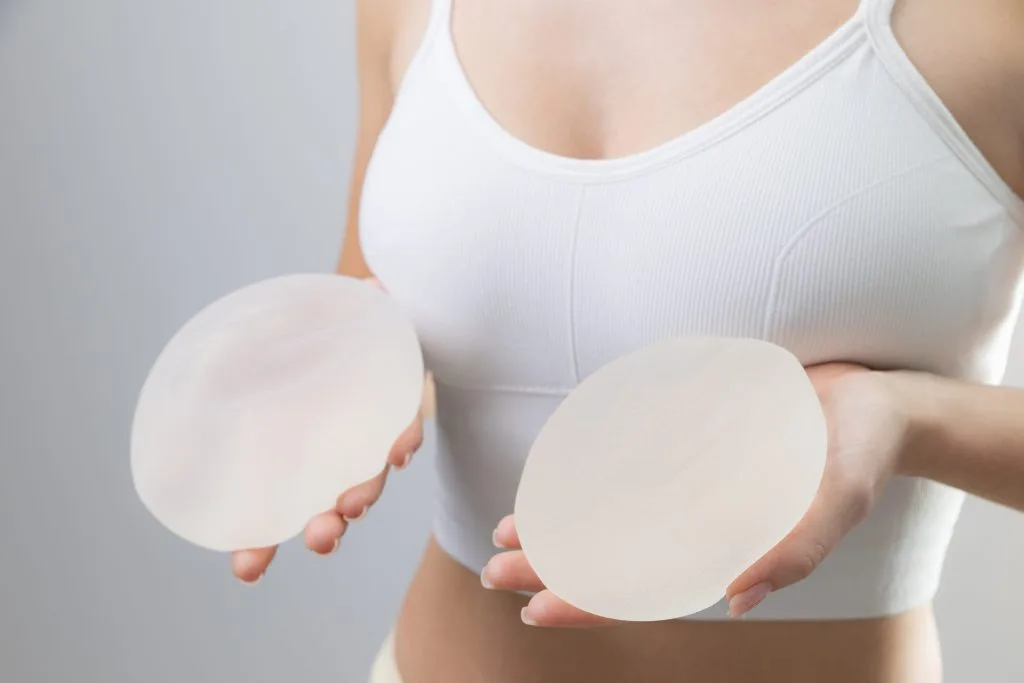
The core difference is the source of the volume. Fat transfer uses fat from your own body. Implants use a medical-grade device placed in the breast to create size and shape.
Volume source: Implants use medical-grade devices (silicone or saline shells). Fat transfer uses your own purified fat, harvested from another area via liposuction.
Size increase: Implants can provide a significant, predictable increase, often multiple cup sizes in a single procedure. Fat transfer typically results in a more modest increase, usually about one cup size per session.
Procedure scope: Implant surgery focuses on the breasts only. Fat transfer is a dual-benefit procedure that also contours donor areas such as the abdomen, thighs, hips, or flanks.
Feel and shape: Fat transfer tends to give a very natural feel. Implants can create a wider range of sizes and a more defined roundness.
Longevity: Living fat that remains after healing becomes part of you. Implant volume is set by the device and stays until you choose to change or remove it.
Natural breast augmentation using fat grafting has become an increasingly sought-after procedure for patients who want a subtle enhancement using their own tissue. It is a two-in-one approach that also refines your figure.
The process begins with liposuction. Dr. Hankins carefully removes excess fat from a donor area, such as the abdomen, hips, flanks, or thighs. Harvested fat is placed in a special centrifuge to purify it, then strategically injected into multiple layers of the breast tissue.
His meticulous technique gives the fat the best possible chance of survival and integration.
The fat that remains after healing can become a lasting part of the breast.
This approach does two jobs at once: it can soften and fill the breast while reducing fullness in a donor area.
Because the volume comes from living fat, results can shift if your weight changes later. Steady weight helps keep the look more consistent.
Think of it as a refinement, not a dramatic resize.
You may be a good candidate for fat transfer breast augmentation if you:
Desire a modest increase in breast size (typically half to one full cup size per session)
Have sufficient excess fat in another part of your body to serve as a donor site
Wish to simultaneously contour another area of your body
Prefer to use your own tissue rather than an implant
Have good skin quality and breasts that do not need a major lift
Want a softer, more natural slope rather than a round, high look
Are at a stable weight, in good overall health, and have realistic expectations
Not everyone has sufficient donor fat, and very lean patients may not be able to transfer enough volume in a single visit. Dr. Hankins examines each person to see whether the fat is in a usable, treatable location and whether fat transfer can meet the goal.
Fat transfer offers several clear pluses:
Completely natural: Results look and feel natural because they are created with your own body tissue. The breast often moves and feels like breast tissue.
Your own tissue: There is no implant to feel, see, or think about over time.
Dual body contouring: You benefit from both breast enhancement and slimming of the area where fat was harvested.
Minimal incisions: The procedure is performed with very small cannulas, resulting in tiny incisions that are often barely visible once healed.
Useful for shaping: Fat can help smooth small dips, subtly improve cleavage, or even out mild asymmetry.
A good fit for modest goals: If you already like your breast shape and only want more softness or a small bump in size, fat can be enough.
Dr. Hankins focuses on natural outcomes. Fat grafting fits that philosophy when the anatomy and the goal match.
Fat transfer is not the right tool for every goal.
Limited volume increase: The amount of size increase is limited by the amount of donor fat available and the amount the breast tissue can support. A large cup-size jump cannot be reached with fat alone.
Need for donor fat: Without extra fat, there is nothing to transfer.
Variable fat survival: Not all of the transferred fat will survive. Dr. Hankins uses advanced techniques to maximize survival, but on average a portion is naturally reabsorbed over the first few months. The final size is the fat that remains after healing, not the amount placed on the day of surgery.
Weight sensitivity: Later weight loss can reduce breast volume. Weight gain can increase it.
Less upper-pole roundness: Implants are usually better at creating a round, lifted upper breast if that is the look you want.
These limits are why a full exam matters. A treatment plan that ignores donor fat, skin quality, or size goals will not serve you well.
Recovery after fat transfer involves two areas: the breasts and the donor sites. Dr. Christopher Hankins is known for delivering exceptional results with minimal downtime. Patients will experience some swelling and bruising in both areas, but discomfort is generally mild and manageable.
Donor sites often feel sore, tight, or bruised, similar to a strenuous workout or liposuction recovery
Most people can return to desk work and light activities within a week
Compression on donor areas is common; follow activity limits so the transferred fat can settle
Final results become apparent after about six months, once swelling has fully subsided and the transferred fat cells have established a permanent blood supply
For decades, breast implants have been a reliable way to achieve significant, predictable changes in breast size and shape. Premier Plastic Surgery offers breast augmentation with implants as well as breast lift with implants when shape and position need to change along with size.
Patients can choose from several types of implants, primarily categorized by fill, shape, and profile.
Silicone implants: Filled with a cohesive silicone gel that closely mimics the feel of natural breast tissue. These implants come in different levels of firmness. They are FDA-approved for women 22 and older.
Saline implants: Filled with sterile salt water. The implant shell is placed first, then filled to the desired volume during surgery. Some people like that they can be adjusted in fill volume. If a saline implant were to rupture or leak, the body would safely absorb the solution. Saline implants carry a different FDA-approved age minimum (18+)
Shape and profile: Both types come in various shapes (round or teardrop), sizes, and profiles (projection levels). Round implants can add more upper fullness. Profile changes whether the look is subtle or more prominent. Width should match your chest so the implant does not look too wide or too narrow.
Dr. Hankins helps you match implant type, size, and profile to your chest width, tissue thickness, and the style of result you want. The implant should fit the frame, not a number on a chart.
You may be a stronger candidate for breast implants if you:
Desire a significant increase in breast size (more than one cup size)
Have very little excess body fat and are not a candidate for fat transfer
Want more upper-breast roundness, “upper pole fullness,” or cleavage than fat can usually create
Prefer a predictable, one-stage procedure for volume enhancement
Are in good health and have realistic expectations
Understand that implants are devices you may later choose to change or remove
Implants can also help when the breasts differ in size, because each side can be planned with a different volume. Patients with thinner tissue still can be candidates, but implant choice and placement must respect that anatomy.
If your breasts sit low, implants alone may not fix position. In that case, a lift with implants may be the better pairing.
Implants offer strengths that fat transfer cannot always match:
Predictable and significant volume: You choose a size range and can plan a precise, substantial increase, including several cup sizes when that is the goal.
Customizable shape and projection: Implant types, shapes, and profiles help create a specific look, from a subtle slope to roundness, projection, and cleavage.
No need for donor fat: Lean patients can still enlarge the breasts.
Proven track record: Breast implants have been used for decades and are among the most studied medical devices in the world.
Single-stage procedure: The desired volume is achieved in one surgery.
Stable size with weight: Everyday weight shifts don’t change implant volume.
Option to revise later: Implant exchange or removal is a planned service if your tastes or needs change.
For someone who wants a clear, visible change in clothing and in the mirror, implants often meet that goal more directly.
Implants also come with trade-offs. They are about how the result lives with you.
Not your own tissue: You will always have a device in the breast.
Not a lifetime device: While durable, breast implants are not guaranteed to last forever and may require replacement or removal. Many people later change size, switch type, or remove implants.
Feel and movement differ: While modern implants feel remarkably natural, even a soft implant is not the same as native fat and breast tissue.
No donor-site contouring: They do not slim another body area.
Edges or ripples can show in people with very thin tissue, depending on implant choice and anatomy.
Size is “fixed” until you change the implant: Fat can fluctuate with weight; implant volume does not.
None of these points means implants are wrong. They mean you should want the kind of result implants create, not just the idea of “bigger.”
Recovery from breast implant surgery is focused on the chest and typically involves a few weeks of taking it easy. Swelling, tightness, and a feeling of pressure are common, and the breasts may sit high at first before they settle. Dr. Hankins will provide a detailed post-operative care plan and follow-up visits to ensure a smooth recovery.
Most patients are back to work and non-strenuous activities within one to two weeks
Limits on lifting, reaching, and exercise apply while tissues calm down; sleeping position may be restricted at first
Initial results are visible immediately because the volume is there, but the final shape and position settle over the next few months as tissues relax and the implant drops
Expect the early “high and tight” look to soften
Support the breasts as instructed and skip underwire until you are cleared
For planning and expectations, read 21 things you should know before getting a boob job
To truly help you decide which procedure is right for you, it is helpful to compare them directly. Understanding the nuances will empower you to have a more productive conversation with Dr. Hankins.
Fat transfer usually looks and feels most natural because it is derived from your own body. Implants can look natural too, especially when size matches the chest, but they can also create a rounder, more sculpted look if that is what you want.
Amount of change: Implants win on maximum size and can deliver a dramatic, projected result. Fat transfer wins on subtlety and enhances your existing shape rather than creating a new one.
How long the look lasts: Fat that survives healing is living tissue and can last for years, though your breasts will still change with age or significant weight fluctuations. Implant volume stays until you change the device, but implants may need to be exchanged after 10–20 years.
Shape details: Fat is helpful for small contour tweaks. Implants are helpful for projection and a fuller upper breast.
Dr. Hankins’ philosophy emphasizes the use of advanced techniques to ensure safe, efficient procedures with minimal downtime. Neither path is a “next-day back to everything” surgery.
Fat transfer: Recovery involves two areas – the donor site and the breasts. The donor site often experiences more soreness, similar to that after a strenuous workout. Breast recovery is typically faster than with implants.
Breast implants: Recovery is focused on the chest. It may involve more initial discomfort and restrictions on upper body movement for several weeks to allow the implants to settle properly.
If your plan combines breast work with body contouring, downtime can be longer than breast surgery alone. Build that into work, childcare, and exercise calendars.
Ultimately, the choice is a personal one. Dr. Hankins always carefully evaluates the patient as a whole, not just the aesthetic issue, and will help you weigh these factors during your private consultation.
What is your primary motivation? Are you looking for a subtle, natural-looking boost, or are you dreaming of a significantly larger and shapelier bust? Being honest about your desired outcome is the most important factor in making the right choice.
Your existing body shape plays a crucial role. Do you have enough donor fat for a transfer? What is the quality of your skin and existing breast tissue?
Think about how you live, not only how you want to look in a photo. Your overall health, activity level, and plans for future pregnancies can all influence the decision.
Exercise: Runners, weightlifters, and very lean athletes often care a lot about feel and bounce, which may affect implant size or the choice of fat versus implant.
Weight stability: If your weight fluctuates often, fat-transfer volume will move with it.
Future pregnancy: Pregnancy can change breast size and skin. That does not ban surgery, but it should be part of the timing talk.
Health: Good general health supports healing. Any plan starts with whether you are a sound candidate, not with a catalog of sizes.
The most critical step in your journey is the consultation. This is where you can ask questions, voice concerns, and receive an expert recommendation tailored specifically for you. Appointments are required – candidacy is decided at this visit.
Dr. Christopher Hankins reviews your goals, examines your tissue and donor areas, and recommends a treatment plan built for you
Come ready to talk about size, feel, clothing, and how much downtime you can take
Ask how fat transfer, implants, or a lift would each serve your body
If implants are on the table, talk through type, profile, and what future removal or exchange would mean
If fat transfer is on the table, talk through donor sites and how much size is realistic
This visit is also where you can sort combined plans, such as augmentation with a lift, or breast surgery as part of a broader body plan.
When considering fat transfer vs implants for breast augmentation, there is no universal “better” procedure – only the one that is better for you. Fat transfer offers a natural, dual-benefit approach for a modest enhancement, while implants provide predictable and significant volume and shape. The choice depends on your goals, anatomy, and preferences.
Schedule a consultation to receive a personalized plan that aligns with your vision.

About the Author