
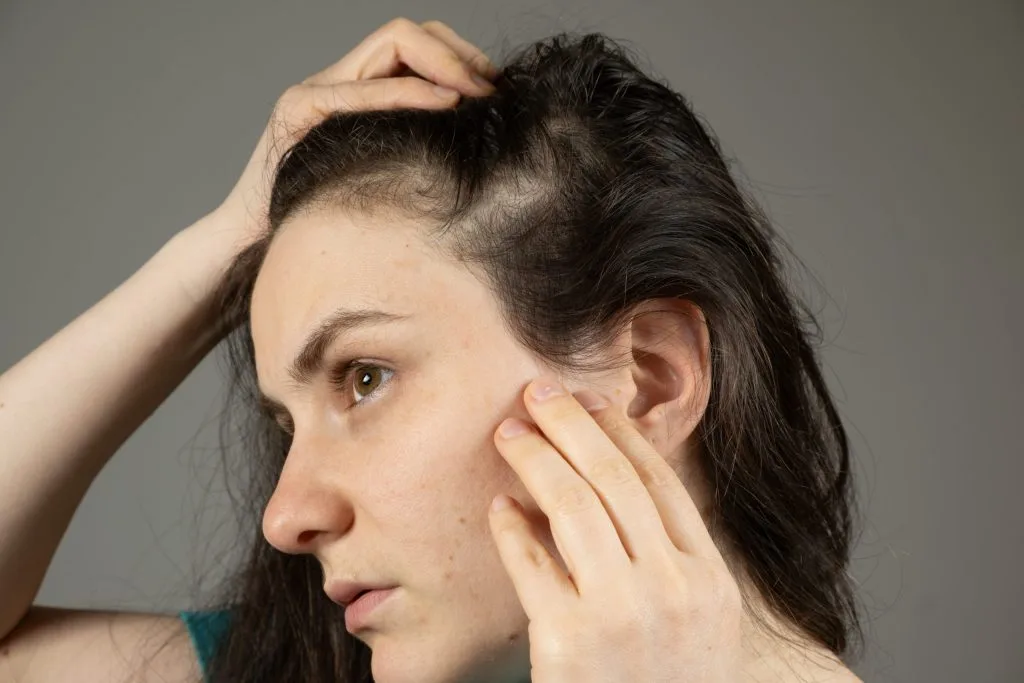
Choosing between PRP and stem cell therapy for hair loss depends on your hair loss pattern, the condition of your existing follicles, and your treatment goals. PRP uses growth factors from your own blood to stimulate and support existing hair follicles, while stem cell therapy aims to promote tissue repair and follicle regeneration using regenerative cells, often derived from fat tissue. Understanding how these treatments differ can help you determine which approach may be better suited to your individual needs.
For patients in the Pearland area, Hair Restoration at Premier Plastic Surgery includes two regenerative options that work with your own biology: PRP and stem cell injections.
Hair follicles need a healthy environment to stay in the growth phase. When that environment fades – from genetics, hormones, age, or stress – hairs grow thinner, then shorter, then they may stop.
PRP, or platelet-rich plasma, uses a concentration of your own platelets to accelerate healing and stimulate cell growth.
Blood is made of red cells, white cells, plasma, and platelets.
Platelets aid clotting and contain hundreds of proteins called growth factors that are vital for healing.
A small sample is processed so the platelet portion is much more concentrated than in normal blood.
That concentrate is injected into the scalp to awaken dormant follicles and encourage thicker hair.
PRP does not create brand-new follicles in a bald area. It is a boost for follicles that can still respond.
Stem cell therapy at Premier Plastic Surgery is a more advanced regenerative procedure. It is not a hair transplant. It is a biologic treatment for people who still have follicles that can be helped.
Adipose (fat) tissue is harvested, typically from the abdomen or flank, through simple manual mini-liposuction.
That fat is rich in Adipose-Derived Stem Cells (ADSCs), which are processed and concentrated.
The cells are injected into thinning areas of the scalp.
Stem cells can develop into many different cell types and signal surrounding tissues to repair and regenerate.
The aim is to improve the “soil” the follicle lives in, not just send a short burst of growth signals.
Both treatments belong to the same family of injectable treatments, but the material and the message they send to the scalp are distinct.
PRP: Your own blood is drawn, similar to a routine blood test. A centrifuge separates platelets and growth factors, yielding golden, platelet-rich plasma. Nothing is added from a donor.
Stem cells: Your own fat tissue is the source. Dr. Christopher Hankins performs a mini-liposuction under local anesthesia to collect a small amount of fat, which is processed to isolate regenerative stem cells.
Because the source varies, the visit plan and cost profile often differ as well.
Think of a follicle like a small factory. In pattern hair loss, that factory slows down. Neither treatment is a cure for genetic hair loss.
PRP: Concentrated growth factors act like fertilizer for the scalp. They signal sluggish or dormant follicles to enter the active growth phase (anagen), increase hair shaft thickness, and improve density. Many people notice less shedding first, then fuller-looking hair over a series of visits. PRP primarily stimulates existing, weakened follicles.
Stem cells: These cells can self-renew and differentiate. When injected, they release potent growth factors, help repair damaged follicles, and regenerate the cellular environment needed for healthy hair growth. Their signaling is considered more robust and comprehensive than PRP alone, with the hope of a more lasting change in the scalp environment.
Results still vary from person to person.
Dr. Hankins does not use one-size-fits-all solutions. During the consultation, he evaluates your hair-loss pattern and recommends a protocol tailored to you. You leave with a clear schedule rather than a generic package.
PRP: An initial series is often spaced about a month apart for the first three to four sessions. Maintenance is usually recommended every 4–6 months to prevent the growth signal from fading.
Stem cells: Often performed as a single, more intensive session. Patients may not need follow-up for a year or more. Plans may be spaced differently and sometimes involve fewer visits, depending on scalp findings and goals.
PRP is a popular, effective entry point into regenerative hair treatments and a straightforward starting point when shedding is new, or the part line is just beginning to widen.
Minimally invasive: A blood draw and a series of small scalp injections.
Quick sessions: Typically completed in about an hour.
No downtime: Most people return to normal routines the same day.
Proven effectiveness: Many studies show increased hair count and thickness in androgenetic alopecia (pattern baldness).
Repeatable: If your hair responds, Dr. Hankins can build maintenance into your plan.
Natural-looking results: You are thickening what you already have – not adding plugs or a different hair texture.
Requires maintenance: Plan on a series, then ongoing follow-up. It is not a single-visit fix.
Gradual change: Many people wait several months before they are sure they see a difference in the mirror or in photos.
Variable results: Effectiveness may depend on the extent of hair loss and platelet concentration in the blood. Two people with similar thinning can get different results.
Less potent: Generally considered less powerful than stem cell therapy for more significant hair thinning.
Needs live follicles: PRP cannot restore a smooth, shiny scalp when no follicles remain.
That is why Dr. Hankins evaluates the whole picture – health, hair pattern, and goals – before he recommends PRP.
Stem cell therapy represents a more powerful approach to hair restoration. Dr. Hankins offers only treatments that are in a patient’s interest. If this option is a stronger match for your scalp findings, that is what he will discuss. If it is not, he will say so.
Highly potent: A more comprehensive regenerative signal that can lead to more significant, robust results.
Long-lasting: Effects of a single treatment can last a year or more before a touch-up is considered.
Addresses the root cause: Works to repair the follicular environment at a foundational, cellular level.
Uses your body’s “master cells”: Leverages the most powerful regenerative cells your body has to offer.
Fewer visits: Some plans use fewer visits than a classic PRP series.
More involved procedure: Mini-liposuction to harvest fat is more invasive than a blood draw.
Higher cost: More expensive than PRP due to the way the material is obtained and prepared.
More downtime: The fat-harvesting site may be tender or bruised for a few days.
Younger evidence base: Long-term hair-loss data is thinner than the PRP literature.
Not every scalp is a match: If follicles are gone, regenerative cells cannot rebuild a hairline from bare skin.
Results vary: Go in with realistic hopes—not a promise of a full head of hair. Maintenance may still be part of the long-term plan.
A consultation is required so Dr. Hankins can see whether this option makes sense for you.
Good candidates still have hair to work with. Fine, shorter, or thinning hairs are a better sign than a completely bare patch.
Dr. Hankins follows a philosophy of evaluating each patient as a whole and recommending only treatments that are in their interest and will lead to a successful outcome. Medications, hormones, scalp health, and your timeline all matter. Men and women with pattern hair loss are common candidates for both.
PRP often fits people who:
Are in the early stages of hair thinning, notice early shedding, or have a widening part
Have localized patches of hair loss
Want a treatment made from their own blood
Can commit to a series of visits and later maintenance
Prefer a less involved, well-known, office-based option
Are looking for a maintenance program to support hair health
Stem cell therapy may fit people who:
Have more moderate to advanced or established thinning, with visible follicles remaining
Have not seen sufficient results with other treatments, or have been told PRP may not be enough on its own
Want the most powerful non-surgical option and a regenerative approach rather than platelets alone
Prefer a single treatment with long-lasting effects over a schedule of maintenance sessions
If you are not a candidate for either injection, Dr. Hankins will say that plainly and talk through other paths.
Both PRP and stem cell therapies are at the forefront of regenerative medicine, with a growing body of evidence supporting their use for hair loss. Follicles cycle over months, so neither treatment works overnight.
Yes. PRP has more published clinical evidence for the treatment of pattern hair loss than stem cell injections.
Numerous clinical studies show PRP can increase hair density, hair thickness, and the number of follicles in the growth phase.
In the right patient, it can reduce shedding where follicles are still active.
“Regrow” here means helping miniaturized hairs thicken and remain in the growth phase longer.
It does not help grow hair in completely bald areas or sprout hair on a bald crown.
Yes. The biologic idea is strong, and the evidence for ADSCs is also very strong, though the published track record is younger than PRP’s.
The regenerative capacity of ADSCs has been shown to reactivate dormant hair follicles and improve the overall health of the scalp environment.
Results can be more dramatic and longer-lasting than PRP due to the fundamental repair mechanism of the stem cells.
Early experience is encouraging for selected patients. Dr. Hankins will explain what you can fairly expect in your case.
Neither option replaces a transplant when the goal is to cover a large bald area.
One of the major advantages of these non-surgical treatments is the minimal interruption to your life. These are not surgical hair transplants. There is no graft harvest and no long hidden recovery.
Dr. Hankins is known for achieving meaningful change with minimal downtime. You should still protect the scalp as directed so the biologic material can do its job. Makeup on the hairline, tight hats, and heavy workouts are often paused briefly; your after-visit instructions will be specific to you.
PRP recovery: No real downtime. You might have mild redness or tenderness on the scalp for a few hours. Most people go back to work and daily life the same day.
Stem cell recovery: Still minimal. Scalp injections have no downtime, but the small fat-harvesting site may be tender or bruised for several days. This is easily managed and does not prevent you from returning to most normal activities right away.
Yes – sometimes. PRP and stem cell therapy send different messages. One is a growth-factor boost. The other supports a repair environment.
Using stem cell therapy as a foundational treatment to repair the scalp environment, followed by periodic PRP sessions for ongoing stimulation, can yield excellent, long-lasting results in selected patients. Care may be staged or planned as a series of complementary visits.
Combination care is not automatic. Dr. Hankins will recommend it only if your exam supports it.
If PRP alone is enough, there is no reason to add a second biologic.
If stem cell therapy is the stronger match, that can stand on its own.
The decision is made in consultation, with a treatment plan tailored to you.
PRP is an accessible, blood-based growth-factor treatment often suited for early thinning, while stem cell therapy offers a more powerful, longer-lasting regenerative solution for more established thinning when follicles remain. Both can thicken hair that is still alive, but neither replaces missing follicles.
Schedule a consultation with Dr. Christopher Hankins at the Pearland, TX, office of Premier Plastic Surgery to match the science to your hair and receive a personalized plan for a fuller, healthier head of hair.

About the Author