
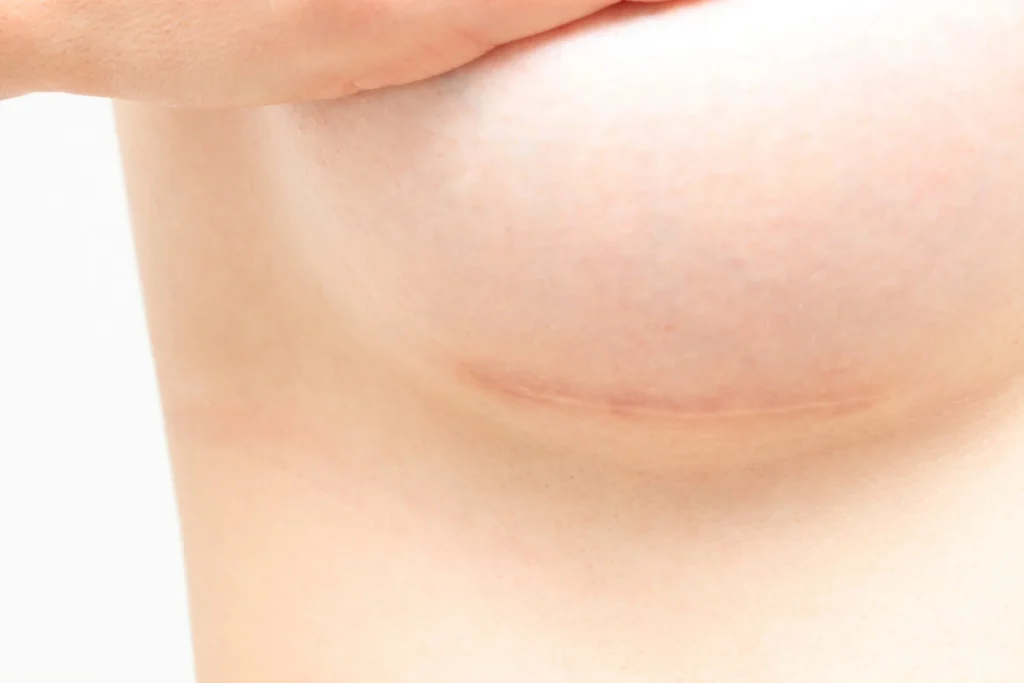
Keloid scar prevention after breast reduction starts long before the first stitch. At Premier Plastic Surgery in Pearland, TX, Christopher Hankins, MD plans every breast reduction around two goals: keeping tension off the healing incisions, and supporting the breast from the inside so the result lasts. Below, Dr. Hankins explains the approach his team has built over many years of treating difficult scars.
Over many years of specialized surgical practice, our team has accumulated extensive experience treating complex scars—particularly keloid scarring following breast reductions and other surgical procedures. A significant portion of our work involves revising and treating keloids and hypertrophic scars that developed from surgeries performed at other practices.
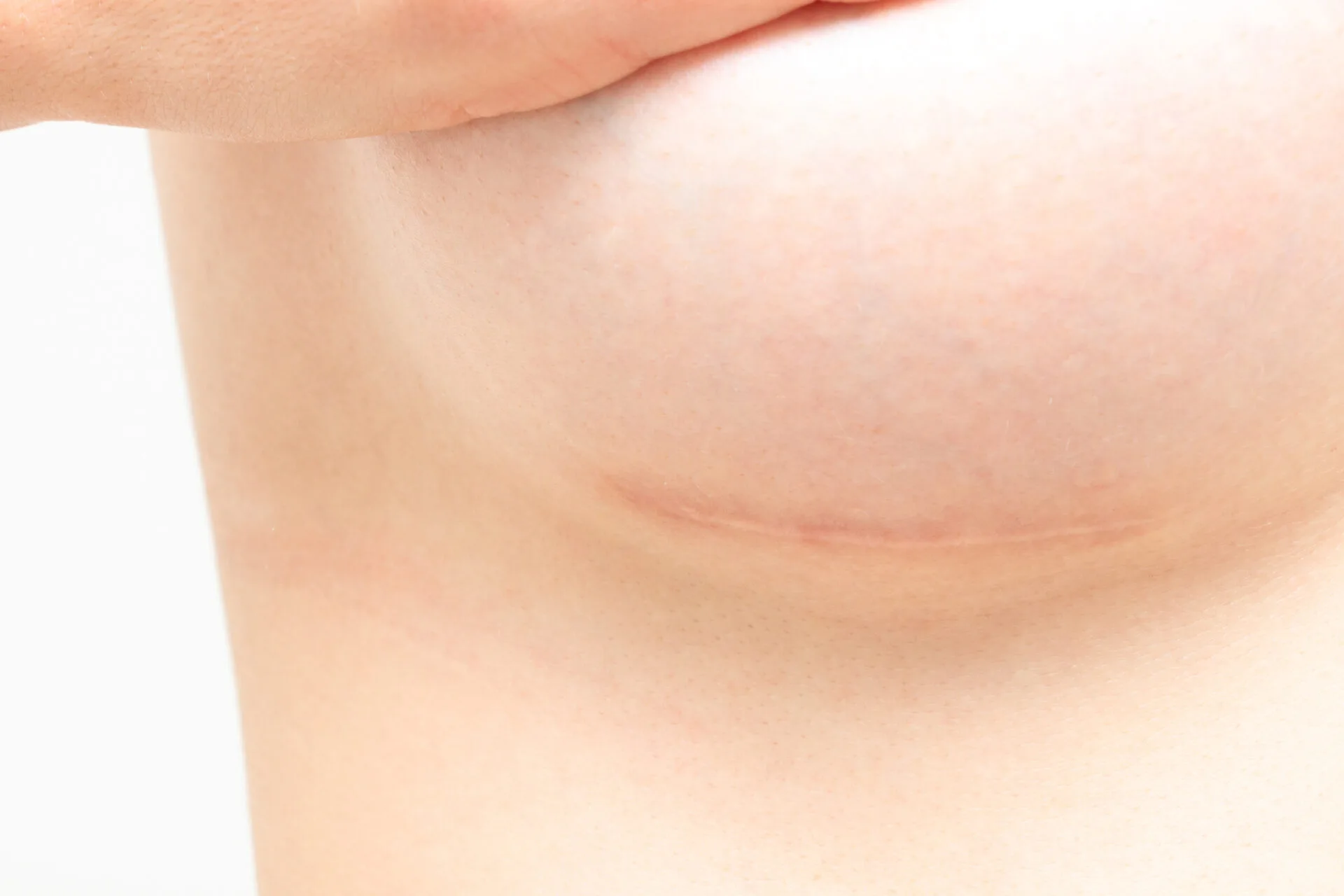
Our dedication to scar management goes beyond daily practice. Based on our outcomes with a large series of patients, we are in the process of compiling a retrospective study of our experience for publication in a peer-reviewed journal. We believe this work will make a significant contribution to the management of scars in post-surgical patients.
In evaluating and treating keloid scars from outside surgeries, we have identified key surgical pitfalls that contribute to severe scarring.
For instance, one common approach seen elsewhere is attempting to excise the entire roll of lateral chest fat behind the breast by extending the surgical incision far along the side of the torso. In our practice, we specifically avoid this approach.
Extending incisions in high-tension areas along the lateral chest creates significant mechanical strain on the healing tissue. This tension can severely restrict a patient’s shoulder mobility—making it painful or difficult to lift the arm completely—and drastically increases the risk of developing thick, painful keloid scars. By prioritizing sound biomechanical principles and avoiding unnecessary surgical tension, we protect both function and appearance. We can offer other approaches to address this problem.
For patients with a personal or family history of keloid scarring, scar prevention is not an optional “add-on”—it is an essential component of a successful surgical outcome.
When a high-risk patient undergoes surgery, omitting preventative scar management carries a substantial risk of severe, long-term scarring. Because our primary obligation is to deliver the safest and best possible outcome, our policy is straightforward:
These are keloids Dr. Hankins and our team have treated, shown before and after. You can see more cases in our keloid scar treatment gallery and learn about the options on our keloid scar treatment page.


During a breast reduction, tissue is removed, but skin alone cannot support the remaining breast mass over time. Skin lacks structural elasticity; it is the internal architecture of the breast that maintains shape, position, and projection.
Without internal structural support, reduced breasts are prone to long-term sequelae over time—specifically “bottoming out” and lower-pole descent.
At the time of reduction, when appropriate and desired by the patient, we routinely perform internal shaping and mastopexy (breast lift) techniques. By anchoring the breast tissue higher up to the chest wall/superior pole, we create a secure internal framework. This internal structure supports the breast long down the road, preventing lower-pole stretch and maintaining an elevated, youthful contour.
Every surgical plan we create is tailored specifically to the patient’s anatomy, medical history, and aesthetic goals. We believe in complete transparency regarding what it takes to achieve—and maintain—a beautiful, safe result. For everyday healing advice, see our tips for minimizing scars after plastic surgery.
Tell your surgeon about any personal or family history of keloids. Our approach keeps incisions out of high-tension areas along the side of the chest, and high-risk patients follow our postoperative laser and scar prevention protocol.
A history of keloids makes scar prevention an essential part of the plan rather than an add-on. Dr. Hankins reviews your history at your consultation and builds the scar prevention protocol into your surgery.
Skin alone cannot hold the breast up over time. When appropriate and desired, we add internal shaping and mastopexy at the time of reduction to help prevent bottoming out and lower-pole descent.
If you have a history of keloid scarring or are considering breast reduction surgery, we invite you to schedule a consultation to discuss a personalized plan built on safety, experience, and long-term results.